

Custom Search
|
Algaecides & Bacteria | Deicers & Bubblers | Weed Removal | Pond Pumps | Aeration | Winter Pond Care | Algae Control | Pond Liner | Muck Pellets | Build a Solar Aerator | Rotary Vane Compressors | Floating Fountains | Building a Pond | Linear Air Compressors & Pumps | Weighted Airline | Diffusers & Airstones | Bacta-Pur Bacteria | Solar Aeration Systems | DC & Battery Operated Pumps | Windmill Aeration | Dock Bubbler Packages | Building a Waterfall | Dyes & Colorants | Consultations | Questions & Answers | Links & Resources | Eurasian Milfoil | | Mosquito Control | Pondkeeper Treatments | Aeration Systems | Septic Bacteria | Grease Trap Blocks | Dissolved Oxygen Meters | SOTR & Pumping Rates | Duckweed Control | Pond Plans & Pond Building Books & Guides
| Aeration
Systems Aeration for ponds and lakes, understanding the importance and limitations of pond aerators Some of the more common issues with backyard ponds and small ponds are simply the natural conditions affecting water quality and nothing more. Ponds get older and begin to show signs of that aging in similar ways that can be helped by aeration, circulation and proper shoreline control. Almost everyone with a pond, regardless of it is an existing natural basin or a homemade pond that has been built with care on your property, begins to notice from time to time that the pond starts to show signs of ill-health. Foul odors,
like the stinky sulfur egg smell, sludge buildup and fish kills
can be early warning signs that the natural balance of the pond
has been disrupted or requires some maintenance.
Re-digging a
pond, while it will immediately increases depth and help with structural
flaws in the pond, is often only a temporary solution as these problematic
sediments and thick offensive sludge are typically only a symptom
of a pond needing aeration and proper shoreline revitalization.
Adding an aeration system to your pond or basin will resolve a number
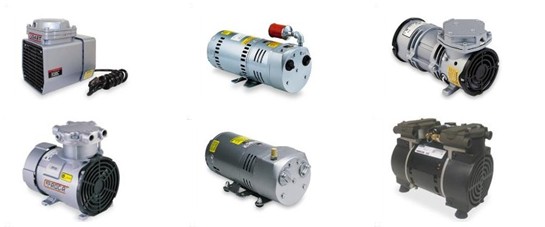
of discouraging problems. Simply put, adding aeration to a pond, water-garden or even a natural lake is one of the best methods to control algae and maintain clear waters and discourage the buildup of bottom sediments.. It is extremely important never to overlook aeration when building a new pond or when trying to restore one that is undergoing eutrophication especially in small basins that have a large organic load and that are typically mucky at the bottom. The organic material can be grass clippings, so it is best to leave a perimeter of natural thick vegetation and even aquatic plants to help reduce erosion and prevent runoff laced with fertilizers from getting into the water. Solar Aeration Systems Build Your Own Aeration System Complete Aeration Systems The heart of any lake-bed, or bottom-mounted aeration system is often the air compressor itself. There are a variety of compressors that are quiet, small, energy efficient compressors that will pump a steady and constant flow of oxygen to your bottom-mounted diffuser system.
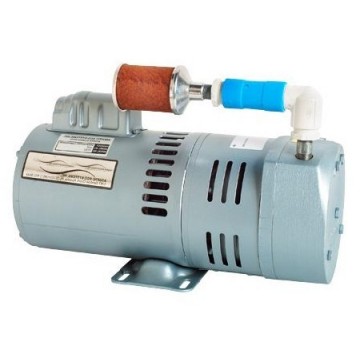
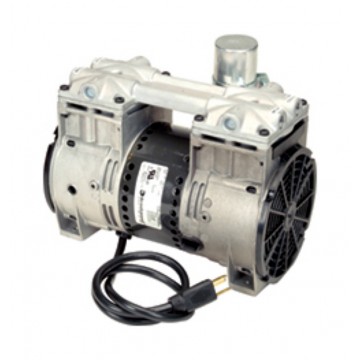
You want to build your own aeration system? Because you are a real do-it-yourself kind of person, I'll tell you the three basic requirements you must have to build a cheap airator...ok...you need a few more parts than this but bear with me I'm making a point on how simple it can be for my uncle Howard. You really only need to buy three things to make my own aerator: 1. An air pump or compressor 2. Some hose 3. An air diffuser or diffusers See our recommended products for diy aeration systems My experience has shown that in most cases that adding air diffusion into the bottom levels of the pond is often the the best form of aeration. This manner of aerating is basically the injection of air bubbles into the water to supply oxygen as well to create water movement because as the small air bubbles rise to the surface they create a movement that pulls oxygen deprived waters from the depths up towards the surface where they can interact with the atmosphere and achieve a high level of efficient oxygen transfer. The water of the pond is continuously being turned over and circulated towards the the surface by air diffuser plates, airstones, disc diffusers, or coarse bubble homemade diffusers that some people build themselves. There are many ways to get the air into the pond but the general rule is that the smaller the bubble the better the efficiency of the system will be. Aeration can be done with electric air compressors or linear pumps or by windmills or even solar aeration systems! There are many ways to achieve the goal and the location of your pond will determine whether you want to use a windmill for aeration, an electrical system, or a solar pump. Whatever way you do it, take the time to install the best system you can afford as seeing a pond with clear water and happy fish and frogs is truly a joy and any fish lover knows that maintaining fish, either trout, ass or koi, is a passion and now to be taken lightly! Aeration, depending on your longitude and latitude in the world can be effective all year round or only during certain seasons but it is undoubtedly the key ingredient in maintaining a healthy aquatic system. The benefits of using an aeration system, especially when combined with applications of natural pond bacteria that feeds on organic materials like leaves and fish waste, will return your pond to vibrant health in no time at all!. Building an aeration system can be a snap especially if you have a pond store in your town where experts can help choose the best system components for you, although looking on the Internet for pond supplies is another fast way to get the information you need. But be careful, there are many people trying to get pond owners to part with their hard earned money with new fangled technologies like ultrasonic algae killers or complicated bubbler systems, when the fact is it is not rocket science! The heart of any lake-bed, or bottom-mounted aeration system is often the air compressor itself. There are a variety of compressors that are quiet, small, energy efficient compressors that will pump a steady and constant flow of oxygen to your bottom-mounted diffuser system. The depth of the pond where the diffusers are located will determine the type of compressor you require. Shallow ponds less than 9 feet deep can often be aerated with a small linear or diaphragm type of pump that are usually fairly silent and real energy misers! If you have a deeper pond, from 8 to 15 feet deep you may need to use a rotary vane compressor, although the carbon vanes are known to require changing every 18 to 34 months. Piston compressors can delivery up to 35 PSI or more and are excellent for deep water aeration. While piston compressors often do not have the high levels of CFM (cubic feet per minute) of airflow as a rotary vane or linear pump, they make up for it in reliable strong airflow. Windmills can also be used and in North America there are a few choices of windmill aeration systems both in Canada and here in the United States and I have even seen some real go-getters build a windmill aerator out of old cars and tractor parts, but I wouldn't recommend it. The standard windmill like a Superior Windmill or Koenders Windmill or Beckermills Windmill or American Eagle Windmill or Outdoor Water Solutions Windmill works by having a diaphragm compressor, bellows system in the American Eagle Windmill, in the head of the windmill As wind turns the fans of the windmill compressed air is forced down the airline into the airstone in the pond. No electricity is required and the simple technology has worked extremely well for decades as farmers across the plains have attested to. Aerating dugouts with a windmill is a popular practice in areas where there is often no electrical source, plus there is only the initial cost and construction of the system to contend with and no ongoing maintenance fees. Solar systems can be built as well but the DC compressors used in solar aerators deliver fairly low levels of pressure and CFM. Solar direct systems are less expensive and can be built by many people who want a homemade aeration system. Battery back-up systems are more expensive but allow you to use large compressor like a small rotary vane compressor which will increase your airflow and allow you to aerate a larger area. Whichever compressor you choose you will then need to run an airline to your diffuser system (airstone, membrane disc, diffuser tubing) and there are ways to save money here. Using weighted tubing or self-sinking airhose is the fastest way because it will sink quickly on it's own but it can run over $1.50 per foot or more! A cheaper way is to use standard airline, often 1/2" or even 3/8" which does float but by zip tying some rebar or threading the tubing through bricks you can run any length from the compressor to the diffuser for under $100. In order to determine the size of the compressor and the number of diffusers you will need there are at least two critical factors to consider and this is why it is often good to consult a pond expert before starting. First you must know the true depth of your pond as this will determine the PSI required from your compressor and when you look at the shape of the pond this determines the number of diffusers you need which will determine the best CFM you need from your compressor since most diffusers require at least .5 CFM for operation. This data helps you decide if you can get away with using a linear air pump or need to go with one of the bad boys like a 1/2 HP piston compressor or 1 3/4HP rotary vane. Making the wrong choice at this stage can mean burning out a compressor and losing a lot of time and money in the process! Large Pond Aeration Systems On Amazon As Amazon affiliates we may recieve compensation for products purchased through our Amazon links. 
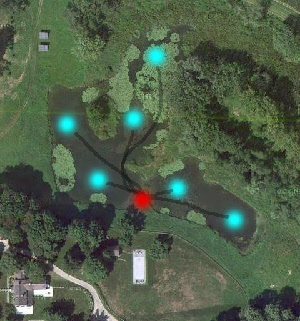
If you are using a windmill or a high pressure dual-piston compressor then the compressor can actually be replaced quite far from the pond, sometimes up to 900 feet or 1 km away although as you can imagine this requires laying out some 3/4" airline which can be a messy job if you need to bury your tubing. Better to try and get the system as close to the pond as possible although I want you to understand that you can go a long distance with the right tools and products. A round pond like a big bowl with a single deepest area and an equally proportional interior grade may require only one diffuser placed at the deepest point. This will provide a nice even circulation but the diffuser doesn't necessarily have to be in the center so look at the entire pond as a whole because raising fish can add additional points of concern when using aeration such as overheating the pond with aeration. There are thermostat controls to automatically tun on aerators when temperatures drop below a certain level, this helps prevent fish kills as trout are very susceptible to warm temperatures. An irregular shaped, often kidney shaped or bean shaped, pond with more variations in depth and shoreline slope may involve the installation of one or more diffusers but again, this is not always the case. Balance the need for aeration by looking at the existing condition of the pond, do you have algae, are fish dying? Sometimes even in a large pond we only add a single aeration station...it all depends and there are no hard a fast rules to go by...although pond stores will try and often sell their biggest aeration package they can! HQUA Complete Aeration Systems 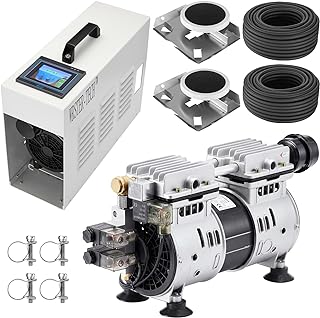 Best
Price is on Amazon Best
Price is on AmazonAs an Amazon affiliate we may recieve payment for purchases made through Amazon. Water-Resistant Ground Cabinet—Equipped with the protective cabinet with waterproofing grade IPX1 , you do not need to worry about the drizzly day while using the pond aerators for your outdoor ponds or lakes. Recommend to keep the aerator in a ventilated house in rainny days for safety concerns. 3/4 HP Air Compressor—Highly efficient and quiet 3/4 HP oil-free Rocking Piston Air Pump, offers 100ft hose pipe in two rolls, enables the air compressor operates up to 50 ft depth in outdoor ponds olakes up to 3-acres. The motor of the pond air pump draws 5 AMP and pumps 4.7 CFM of air, with 60DB low noise level and working tempreture from 0-100?. Function and Applications—With the compressed air blows into the bottom of the pond, dissolved oxygen rate increases in the outdoor ponds or lakes. WRSTER-TECH Pond aerator helps to keeps water clear and promotes water flow or circulation. Easy Installation—Connecting the air hose to the air outlet and air diffuser and then plugging in the power cord to the socket, pressing the red button on the side of the ground cabinet to work the aerator and freely choose the working mode to meet your demands.
Pond
Report Store
The pond report also has information on: Algaecides & Bacteria | Deicers & Bubblers | Weed Removal | Pond Pumps | Aeration | Winter Pond Care | Algae Control | Pond Liner | Muck Pellets | Build a Solar Aerator | Rotary Vane Compressors | Floating Fountains | Building a Pond | Linear Air Compressors & Pumps | Weighted Airline | Diffusers & Airstones | Solar Aeration Systems | DC & Battery Operated Pumps | Windmill Aeration | Dock Bubbler Packages | Building a Waterfall | Dyes & Colorants | Consultations | Questions & Answers | Links & Resources | Eurasian Milfoil | | Mosquito Control | Pondkeeper Treatments | Aeration Systems | Septic Bacteria | Grease Trap Blocks | Dissolved Oxygen Meters | SOTR & Pumping Rates | Portable Generators | Duckweed Control | Pond Plans & Pond Building Books & Guides | © 2007 - 2026 The Pond Report about us | privacy policy | contact us |
||||||||||||||||||||||||

 All
About Building Waterfalls, Ponds, and Streams
All
About Building Waterfalls, Ponds, and Streams How
to Build Ponds and Waterfalls and Much More...
How
to Build Ponds and Waterfalls and Much More... Smart
Guide: Ponds, Fountains & Waterfalls (Landscaping)
Smart
Guide: Ponds, Fountains & Waterfalls (Landscaping)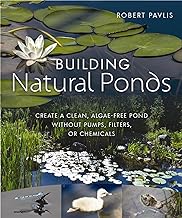 Building
Natural Ponds: Create a Clean, Algae-free Pond without Pumps,
Filters, or Chemicals
Building
Natural Ponds: Create a Clean, Algae-free Pond without Pumps,
Filters, or Chemicals