Windmill
Aeration & Windmill Pumps
Using
the power of the wind for aerating a pond or pumping water.
If you are considering a windmill aeration system, American Eagle,
Outdoor Water Solutions, Koenders, or BeckerMills, let our experts
help choose the best system. They are not all equal and your pond
size, depth and topography can make a difference. We've helped hundreds
of pond owners choose the best aeration system and windmills often
cause the most questions
Whenever I go to
visit a pond in need of help I am always asked of the effectiveness
of windmill aeration systems to supply the circulation and oxygenation
needed to restore a pond that is full of stinky muck and sludge or
feeling the common problems of thick algae growth on the surface.
Of course an electric aeration system might be more efficient in the
end there is still the idea that a windmill could assist in beneficial
ways and as such would require no costs beyond the initial installation
and proper anchoring of the windmill. The idea is sound and understandable
with the cost of operating an aerator but sometimes a windmill is
not all it is cracked up to be despite the best marketing points of
dealers and the manufacturers of these devices.
Before we continue I'd like to mention a few things. These windmills
DO NOT create electricity and cannot be tinkered with or jimmy-rigged
to create AC current.
These pump air into ponds or pump water using air. So if you want
to generate electricity and go off-grid then you need a windmill to
generate electricity .
One more thing to keep in mind is that you can probably aerate a pond
cheaper with a small efficient electric system. .
One more thing to keep in mind is that you can probably aerate a pond
cheaper with a small efficient electric system.
The ideal of not paying for kilowats of power to aerate is completly
valid but windmills will cost you at least $1500 and that doesn't
include footings, time to build it, etc. Expect $2000 to $6000 in
costs.
First, before we
get to The Pond Report windmill ratings of the different options available
on the market, let me try and describe the operation of the typical
windmill system and how the homemade aeration aficionado may have
a lot to realize before embarking on a new project such as trying
to build a do-it-yourself windmill aeration system.
The Windmill Tower
Most
windmills built and sold in North America are constructed in a similar
fashion and before I give my ratings for the different approaches
for anchoring and construction I will start with the basic step by
step approach. The tower of the windmill must be strong enough to
withstand severe winds and pond owners often underestimate the ability
of their clay or soil to properly anchor the steel anchoring pins
included with most kits.
For the last
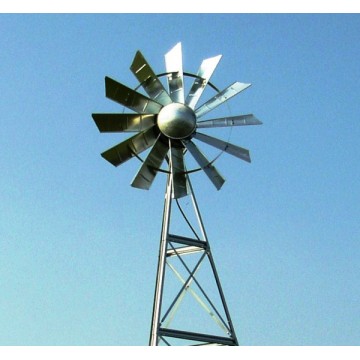
20 odd years the principle style of windmill tower has been a three-legged
twenty foot structure made of galvanized metal. The average footprint
of a 20 foot windmill is between 84 and 100 inches depending on
the precise model being purchased. There are similarities between
the models so ensure than the retailer offers the precise distance
for the anchoring pins especially if you want to anchor them into
cement footing prior to erecting the windmill tower.
I have seen some poor souls anchor their pins in 12 inch diameter
sonotubes only to discover that their footings were off center by
2 inches and the results were not pretty! The three-legged windmill
tower has been popularized by the Koenders and Superior brand of
windmills.
There are also four legged windmills such as the Beckermills Windmills
or the Windmills which requires a square based footprint of various
sizes depending on which height is chosen. . I find that it is best
to but the tallest windmill that will fit your budget and your landscape;
the higher tower allows the windmill head, fan blades, to capture
as much wind as possible. While manufacturers claim that their mills
will operate in as little as 5 mph I tend to err on the side of
caution and suggest that it is best to buy the tallest windmill
that will fit and expect that the wind required is as much as double
to what is reported!
A new
arrival on the scene is the uni-pole or single pole mount windmill.
Until now I've seen many people mount the head of a windmill on
a number of structures from old radio towers to telephone poles
with limiting degrees of success. The single pole can be aesthetically
more appealing to many pond owners who find that next to their pond
the three or four legged structure appears either too old-fashioned
or too much like a power company or cellphone broadcast tower!
Recommendations for :
windmill aeration systems
| solar
aeration systems
The new 25
foot tall single uni-pole windmill has the advantage of being able
to enter into zones of higher wind speeds which is critical especially
when dual-diaphragm compressors are used to aerate larger ponds
with a windmill. One nice thing about a unipole windmill is that
the footprint of the structure is much smaller than a three or four
legged windmill although it does require a solid slab of approximately
10 by 10 feet to be secure.
The aluminum reinforced pole is similar to a lighting mast and usually
comes with a hinged base or pivot points like the multi-legged models
to make erection and servicing off the windmill easier. The taller
structure definitely puts the fan blades up where the swifter winds
blow; I've seen a unit mounted on a 40 foot tower and that sucker
really never stopped spinning there was so much constant wind. Of
course mounting the compressor on build your own windmill type towers
makes servicing or changing parts difficult so may be only an option
for farmers or owners of machinery or tractors or cranes to to help
with the installation.
Soilfloc®
Pond Sealant
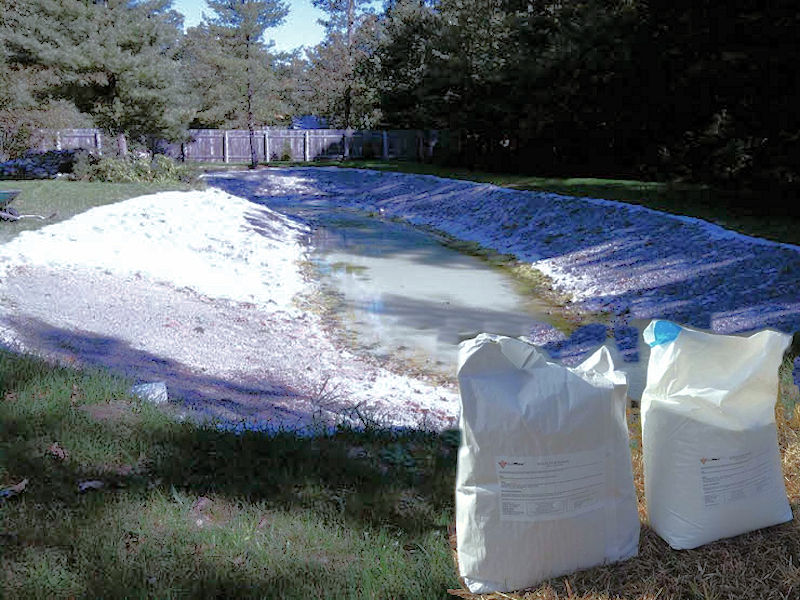 Polymer Pond Sealant
Soilfloc® Sealant is the best polymer
based sealant available for your canal, irrigation ditch
or watering hole. Specifically designed to find leaks,
whether in the floor, the wall or through rock formations
and seal them. Soilfloc® custom blends linear and cross-linked
polymers to seal any type of soil, for any sized project.
Muck
Remover
The biological removal of muck and sludge
from ponds, lakes and canals is an ecological way to
eliminate organic sediments from ruining shorelines
and making swimming impossible. Safe muck eating bacteria
are blended from anaerobic bacterial mixtures and enzymes
that specifically target the thick, black, stinky muck
that is common in ponds and lakes.

Dock
Bubblers
Bubbler systems use perforated tubing
placed at the bottom of the water around a boathouse,
dock or wall. When using diffuser lines to protect your
dock from ice damage there will be some fairly common
installation procedures: place the air compressor in
a ventilated cabinet or shed and run an airline to the
structure where a weighted bubbler hose is placed at
strategic points around the dock or against the wall.
Solar
Aeration
Bacteria
& Clarifiers
Large
Ponds & Lakes
Pond
Pumps
Information
& Articles
Pond
Books & Guides
Our
Selections On Amazon

As
an Amazon affiliate we may recieve payment for
purchases made through Amazon.

|
The
Lakes Handbook: Lake Restoration and Rehabilitation

Lake
and Pond
Management Guidebook

Earth
Ponds
The Country Pond Maker's Guide to
Building, Maintenance and Restoration

Pond Restoration & Lake Management
Lakes and Reservoirs

Master
Book of the Water Garden:
The Ultimate Guide to the Design and Maintenance of
the Water Garden

Wind
Power Fundamentals, Technologies, Application, Economics

Energy
Independence, Off-Grid and Sustainable Living

|
|
The
windmill air compressor system
Most windmills
sold in North America, besides the ones that generate electricity,
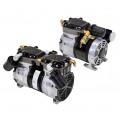
are diaphragm pumps. American Eagle uses a bellows style air pump
which has a high volume but lower pressure capabilities making it
more suited for aerating ponds less than 15 feet deep.
Anyone
familiar with the simplicity of an old-fashioned diaphragm pump
understands that this is likely the main reason for the absolute
success in efficiency of a windmill aeration system.
These compressors can deliver anywhere from 6 to 30 PSI depending
on the make and model chosen which make them serious competition
to such renewable energy opponents as the solar power systems which
typically generate less than 5 PSI for a similarly priced system.
An expensive windmill will still be much cheaper than an inexpensive
solar system so I often recommend to my clients to consider wind
power over solar power.
There are a few configurations available on the market today and
anyone visiting a pond supply store should understand the needs
of their pond versus the realistic performance parameters of the
windmill; be sure the company you buy from offers the expertise
and preferably the local windmill installation service as the building
of a windmill plus the installation of airstones can consume several
days for a novice and due to the complexity of the systems, despite
the detailed instructions that typically come with the product,
the final cost in time alone can make it a better deal to hire the
experts to build and install the system. When my team does a complete
building a windmill and installing a windmill package we usually
charge $1500 so even though you are buying a windmill on Ebay you
must realize that there will be additional costs!
Let me get back
to the diaphragm: typically a sheer rubber circular piece of heavy
duty flexible composite material creates a seal on the pump head
and as the blades or fans of the windmill turn it pulls and pushes
the diaphragm and the sealed chamber builds up pressure and pumps
it down an airline towards the diffuser, airstone or diffuser tubing
in the pond. Because the high pressure capacity of the windmill
you can run a tubing length of up to several hundred feet and your
diffuser can be placed in a depth of over 20 feet.
The windmill diaphragm is the one thing we see wear out after a
few years of service but there are windmill repair kits available
for all models sold and the replacement of these parts is as easy
as opening the hatch in the windmill head and removing the worn
parts and replacing them with the crisp black diaphragms. To perform
this windmill maintenance it requires the tower is lowered to be
able to open and adjust the windmill head and this is another reason
why hinged anchor braces or pivot pairs should be used.
There
are so many options when it comes to windmill airiation that it
is crucial to use due diligence and to look for the best deal. But
beware, the best deal isn't always the cheapest. I have seen some
people save a few hundred dollars by buying a windmill on eBay but
then they got no service or tech support when things go wrong.
My advice has always been: deal with a company that does more than
sell pond supplies; make sure they have an actual store, with employees
and a track record of knowing what they are doing. There is more
to doing the right thing than saving a few dollars; getting good
advice and information is worth much more in the long run.
If you really really want a windmill you should first try to find
a local dealer. If you have to drive hours hours to go meet a seller
and kick the tires it is worth it.
Windmills can need maintenance and servicing, so you should first
see if their is a local company willing to stand by what they sell.
One thing about windmills is that in the heat of summer when we
often see windless hot days, which are perfect for creating algae
and also perfect for rendering a windmill aerator useless, the windmill
becomes nothing more than a huge lawn ornament. A hybrid system
can be used to turn on a small electric system when winds drop or
sometimes going completely electric can be a better investment as
you can turn it on and off only when you need it.
Of course windmill companies will try and sell a windmill but sometimes
an electric system is more efficient and will better suit the pond.
I've seen my share of people with windmills that barely turn because
the overestimated the amount of wind they received. In most cases
a windmill will be fine to aerate small ponds, maybe not ideal for
commercial or industrial applications but for hobby ponds or just
to help circulate and aerate a windmill can be perfect.
If you have a windy spot without trees in the area the windmill
will be a great system...when the wind blows the bubbles will be
flowing and the pond keeps aerated! There are many online windmill
sellers, all windmills are pretty easy to order online and you will
get get ten boxes on your porch... but having a local rep available
at the end of the phone is helpful and what I recommend most if
possible.
If not then you want to buy from a company that provides support
after the purchase. I also tell my clients that building and anchoring
the windmill isn't like setting up a bird feeder...you need cement
footings and the patience of Job to put all the braces, bolts, fasteners
and screws into place!
Aeration
Windmill Brands & Reviews
All
reviews are based on our knowledge and should be considered as opinions
and not scientific or necessarily valid in some cases due to changes
in manufacturing quality. May the buyer beware in all cases and
ask questions before you buy. Windmill manufacturers are welcome
to submit their product information so we may post it to better
inform consumers. Some manufacturers claim"WE HAVE THE BEST
WINDMILL IN THE WORLD" so how could you not say we are
the best windmill ever produced. An intelligent person tends to
see such claims for what they really are.
American Eagle
American Eagle by Joe Mescan Windmills
The American Eagle bellows windmill is a high-volume low-pressure
aeration windmill. The bellows type of compressor delivers from
3 to 6 CFM with a maximum 8 PSI which means your diffuser airstones
should not be in waters deeper than 15 feet. The Manufacturer recommends
12 foot placement of diffusers.
The American Eagle is another impressive four legged tower that
comes in 18 foot and 23 foot towers and has a large 6 foot diameter
fan head. They use a bellows type air compressor of Goodyear quality
and the warranty on the bellows, the most important part, is 5 years
which is the longest warranty of any manufacturer.
The American Eagle Windmills now have Zinc Plate/Yellow Chromate
Crankshafts.
The original crankshafts have been field tested for over 3 years
now; therefore much longer warranties will come into effect soon.
They field test hundreds of units prior to giving unrealistic warranties.
We will keep you posted of any new American Eagle developments.
The American
Eagle is a fine brand but we've been asked to not print anything
about them as they consider saying anything less than "The
American Eagle Windmill is the Best Windmill in the World"
to be an insult and a falsehood. They asked us not to compare their
windmills to other popular brands because they insist that their
brand is a higher grade and commercial quality and should not be
mentioned in the same category as other windmills. They don't want
to be reviewed so you need to talk with them directly to determine
if their sales pitch is convincing.
They have posted many videos on YouTube and many posts in forum
showing how superior their windmills and compressors are to every
other technology. They seem to have hundreds of satisfied clients.
If you were to believe the claims of the manufacturer then the American
Eagle is the absolute pinnacle reliability and efficiency. Public
info from their website underlines these facts:
" An American Eagle Windmill will aerate ponds up to 2 acres.
The 13, 18, 23, 28 & 33 foot American Eagle are identical except
for the Tower Height. The 28 foot has a larger 6 feet 6 inch Wheel.
If you can erect the windmill in a wide open windy area at least
200 feet from any buildings, trees or other wind obstructions the
13 or 18 foot windmill is all you need. If you have wind obstructions
closer you will want to purchase the 23, 28 or 33 foot American
Eagle. It has been estimated by an independent study that the American
Eagle can produce up to 6 CFM in strong winds 20 to 25 mph, about
4 CFM at 15 to 20 mph and 3 + CFM in Light to Moderate Breezes.
The American Eagle is a High Volume Bellow type compressor taking
a 1 & 3/4"Stroke unlike High Pressure Diaphragm types that only
make a 1/2" stroke thus The American Eagle can produce over 3 times
the volume of most competitors. Over 14,600 Windmills sold and NOT
one unsatisfied customer."
With such public display of their own perfection you really can't
go wrong can you! As we tell everyone who asks. Do your research,
ask for references and whenever possible find a local dealer where
you can see the product before you buy. If there is no local dealer
who actually has a store to visit to demonstrate the product then
you really need to be able to trust the manufacturer you buy anything
from. Ask questions or visit a local dealer near you.
Pond Report Product Quality & Service Rating™
Outdoor Water Solutions
Made in USA
High
Air Output and pressure capability with flows from 3.0 - 4.5 CFM
rating depending on wind speed. Compressor rated at 30 psi meaning
you can aerate a pond up to 50 feet deep! If you have one that deep
let me know because you must use a submarine to see the bottom!
Outdoor Water Solutions is also the only company to offer a full
5 year warranty on their compressors bearing's and cam's!
Easy Assembly - Windmill designed for easy assembly with offset
holes for quick alignment and rounded corners for improved safety
when working with steel.
Angle Cut Fan Blades - Engineered to capture and operate even with
a limited amount of wind speed. Longer than many competitors on
the market to catch more wind. Total head width is 73", which is
the largest head on the market. More surface area means more torque
and this means more air is pumped into your pond.
One Piece Hub Assembly - Reduces the amount of parts to improve
assembly time and improve on long term maintenance of the windmill.
The one piece hub uses two locking collars and a through bolt at
the end of the compressor shaft. You can install the head on the
shaft in 5 minutes and it will stay put.
Other companies use squeeze clamps that take over an hour to install
and can loosen over time. Anyone who has assembled a Koenders Windmill
will know what a frustrating thing this is! The Outdoor Water Solutions
one piece hub assembly really takes the hassle out of the building!
Outdoor Water Solutions has introduced what we feel are some really
exciting new products! They have the enhanced their pond care product
offering and now offer: · 24' Traditional Windmill Towers · 4 Legged
Windmill Towers · 25' Telescopic Windmill Towers · Wooden Windmills
(both for aeration and ornamental) · A full line of Powder Coated
windmills with Customized Tailfins.
They also have a revolutionary new product called an "Aerator Control
Box" that allows you to connect a windmill to an Electric aerator
and aerate 24 hours a day. When the wind blows, your pond is aerated
by the windmill. When the wind stops, it turns on your electric
aerator. Both run through the same set of airlines and diffusers,
saving you money on both electricity and in getting aeration to
your pond or lake.
OWS has developed their windmill aeration systems with 'Bal-Cam'
technology, the most advanced system available today.
"BalCam" technology significantly increases the amount of air produced
with a single diaphragm compressor utilizing a balanced camshaft
system. Wind-driven aeration works with nature to improve pond ecosystems,
without the need for electricity or fuels. Wind power is good for
the environment, and also allows for installation of the system
even where electricity is not readily available. OWS systems are
reliable, long lasting, effective and attractive in suburban backyards,
rural landscape settings, golf courses and municipal ponds and lakes.
These nostalgic windmills are made in the United States of the highest
quality materials and are virtually maintenance free. "We are aggressive
about combining Mother Nature's water and wind resources with our
state-of-the-art technology to arrive at solutions that help people,"
said John Redd, OWS president. "Our goal is to bring environmentally
sound solutions to outdoor water issues, while 'Working with Nature.'
"Our focus is to deliver products that help improve water, which
benefits livestock, horses, fish and the environment, and improves
the recreational uses of pond and lake water." Based in Springdale,
Outdoor Water Solutions is a leading manufacturer and distributor
of high quality wind- and electric-driven aeration systems and pond
care products. Pond Report Product Quality & Service Rating™
Koenders
Windmills Made in Canada.
The diaphragm system of the Koenders compressors can deliver up to
30PSI which is great for deep water performance and is many times
higher than the American Eagle. CFM ranges from 1.5 to 3CFM depending
on if you have a single or dual diaphragm model.
Koenders windmills have been in the windmill business for years and
have undergone many changes in the last few years. Their website now
claims they were voted the number one windmill in 2012 and there is
a link to a website they created that says indeed they are number
one. It makes us roll our eyes when these companies hire companies
to create multiple blogs and websites to rave about how goof their
products are! Heck, these guys even made a website called PondReports.com
many years after The Pond Report website was started and they tried
to use our good name to boost their own products! But we're talking
about windmills and specifically Koenders so let's not focus on a
website company called Relemtless Technology that creatse a bunch
of spammy pages that appear as independant blogs and websites to boost
Koenders reputation. Who know...but it's good to check things out!
First, their products: They have three tower heights to choose fro:
12, 16 and 20 and new 24 foot tall tower towers (all with three legs)
and they have a sleek and modern windmill the 25 foot high Uni-Pole
Windmill Aeration System. Their Single Diaphragm Pump Compressor produces
up to 1.5 CFM and the double pump compressor produces up to 3 CFM.
Their comprehensive warranty is a solid three years on the their windmills.
Their continuing efforts to improve quality have paid off, especially
for consumers who want a quality aerating windmill, and in the newer
Windmill Installation Manuals they reference to the offset hole technology
they use which adds to the overall strength of the structure. Having
to use tapered alignment punches and needle nose vice grips slows
down the assembly but it adds to the strength enormously; some competitors
use slotted holes to overcome this perceived ‘problem’ but when a
nut comes loose then the strength is lost completely. The strength
of any windmill is one of the keys to safety and longevity and Koenders
Windmills have, through their years of product development, produced
some of the best innovations in windmill technology that competitors
often try to imitate.
Fairly easy to build, a DVD is included in their kits, but watch the
barbs on the metal when building the unit; gloves are recommended
and handy gloves are sold by Koenders. They claim that the single
pump head is suitable for up to 2 acre ponds and the deeper the aisrtone
the more acreage you can airiate with a windmill.
Koenders windmills have been icons of top quality so people wanting
to buy a quality Made in Canada windmill should look no further. The
quality in Koenders has been proven again and again by thousands of
satisfied customers. Head offices in Regina, Canada means decent service
anywhere in North America as they ship their mills from their central
location very quickly.
Pond Report Product Quality & Service Rating™
Superior Windmills Made in Canada.
Another three legged system available in 4 sizes, 12',16, 20 and 24';
with Jetstream and Turbo Jetstream options. Superior windmills is
based in Saskatchewan Canada, and is a serious competitor to Koenders
Windmills. We have heard many customers who bought the Superior models
complain about the lack of customer service and the poor quality of
the merchandise. Of course time moves forward and we would hope that
now after over a decade in business that their systems would have
improved in quality.
Their website was set-up by the same company that created the Koenders
website and the whole range of websites and blogs that were created
to give the impression that independent websites were giving glowing
recomendations of their products.If you are like us you can see through
such veiled attempts at trickery.
It's actually been over 5 years that we've had a customer report on
Superior so if anyone knows how the quality is p[progressing, if it
is getting better or worse, please let us know.
The company sent out press releases about how they are doing better
but their website and blog seem to be stuck in 2009 so it's hard to
tell. They still advertise their systems on the Internet but we can't
give a hard and fast rating or review of their systems based on the
timeline.
Quality issues dogged the company in its early days but since manufacture
reverted back to Saskatchewan, the quality has improved dramatically
and they now offer excellent value for money Several years ago Superior
Windmills designed a dual diaphragm compressor and now apparently
hold a patent on this technology. So successful is this design, that
the market leader Koenders Windmills uses this product under license
in all its dual diaphragm models. Many of the design strengths of
Koenders are featured in the Superior range, which is not surprising
as they both shared many of the same manufacturing specifications
and processes a few years ago. As I said, we don't have much current
information on Superior Windmills. Like it or not they seem to still
have a connection to Koenders windmill and we're not sure if this
is for better or for worse given both firms history and issues over
the years.
Pond Report Product Quality & Service Rating™
Beckermills Windmills Made
in USA.
The Beckermills system is a sturdy four legged tower
and boasts the largest diaphragm and large fan blades precision engineered
to operate at lower wind speeds and allowing the single unit to deliver
over 3.2 CFM. The highest air output of any single diaphragm model.
Available in 12, 16 and 20 foot models and also an impressive array
of colors these mills have never ceased to impress the owners who
buy them. Large 72" Diameter fan wheel. Twelve blades are fully tapered
and get wider at the outer tips, and also change pitch. This allows
blade assembly to start turning at low wind speeds and also develop
high power in strong winds. Welded steel hub is completely assembled.
The blades can easily be attached to the hub. Hub securely attaches
to shaft with 2 set screws tightened down to flat spots on the shaft,
and a bolt and washer in the end of the shaft prevents the fan wheel
from ever coming off.
Direct drive diaphragm pump with 1/2" stroke. The compressor is made
up of a precision machined diaphragm push plate, 2 valve retainers,
and a cast iron bearing holder on cam shaft. (No welds to break or
warping of steel due to welding.) The diaphragm is reinforced neoprene
die cut for accuracy and longevity. The piston and diaphragm assembly
is 60% larger than others, and with the added power of a 72" blade
assembly, will pump 60% more air into your water. Intake Air: All
intake air is filtered through a re-cleanable filter. Crankshaft and
Bearings: The crankshaft is made of high strength 1045 TGP Steel.
Bearings are permanently grease sealed, and are designed for heavy
load capacity. Very good quality windmill, made in the USA, with a
three year warranty. Head office in Wapakoneta, Ohio and no office
found in Canada means most owners of these mills are in the USA.
Pond Report Product Quality & Service Rating™
Email us for information or with your questions.
 Pond
Report Store Pond
Report Store
The
pond report also has information on:
Algaecides
& Bacteria | Deicers
& Bubblers | Weed
Removal | Liquid
Bacteria | Pond
Pumps & Fountains | Aeration
| Winter
Pond Care | Algae
Control | Pond
Liner | Muck Pellets |
Build
a Solar Aerator | Rotary
Vane Compressors | Floating
Fountains
| Building
a Pond | Linear
Air Compressors & Pumps | Weighted
Airline | Diffusers
& Airstones | Solar
Aeration Systems | DC
& Battery Operated Pumps | Windmill
Aeration | Dock
Bubbler Packages | Building
a Waterfall |
Dyes & Colorants | Consultations
| Questions &
Answers
| Links
& Resources | Eurasian
Milfoil
| |
Mosquito Control | Pondkeeper
Treatments | Aeration
Systems | Septic
Bacteria | Grease
Trap Blocks |
Compost Aeration | Dissolved
Oxygen Meters | SOTR
& Pumping Rates |
Portable
Generators |
Duckweed
Control |
Pond
Plans & Pond Building Books & Guides |
© 2007
- 2024 The Pond Report
about
us | privacy
policy | contact
us
|