Septic
Bacteria Formula
Concentrated
formula for cleaning and maintaining septic tanks, drain fields and
ponds
Maintaining
septic tanks in good working order is essential; keeping the septic
drain field clean and eliminating blockages or buildups is a must.
Many rural homeowners and cottage owners are familiar with the septic
tank and understand that regular preventative maintenance is often
the best way to assure there are no problems which can lead to costly
repairs and pumping as well as the potential for environmental damage.
Using natural
microbial septic formulations is probably the best way to assure a
trouble-free septic system.
This waste digesting bacteria works in anaerobic and aerobic conditions
and will eliminate cooking wastes, fruit and vegetable waste, tissue
and paper wastes, human wastes and feces.
The typical application rate septic tanks and drain fields is 4 ounces
for 6,000 gallons; we recommend that in smaller tanks use two ounces
for every 1,500 gallons of tank size. The typical septic tank usually
holds between 1,000 and 2,000 gallons.
The septic bacteria
formula comes in prepackaged soluble pouches each containing 2 ounces
of bacteria.
The easiest way to get this beneficial bacteria into your septic tank
or field is to flush a soluble pouch directly down the toilet. The
bacteria pouch dissolves and the safe, natural bacteria enters the
septic tank or field where it instantly begins to devour waste.
A monthly
treatment will keep your tank operating at a high efficiency level
which reduces pump-outs and will keep odors down and crusting and
hard buildups from forming and fouling or block the tank.
Microbial Septic Formula:
Amazon Septic Products
This product is dissolvable powdered
formulation that contains a blend of six naturally occurring beneficial
bacteria cultures. This is certified non-genetically modified and
non-pathonogenic.
Eliminates: cooking wastes, fats, oils, grease.
Eliminates fruit and vegetable wastes. Eliminates human waste. Eliminates
paper and tissue waste materials. Reduces odors from septic fields,
seepage fields, drainage fields and tanks. Eliminates septic leachate
from ponds and basins. Assists in the removal of leachate, waste and
sewage from ponds. Helps prevent septic system blockages and back-up
and restores slow-flow drains to maximum capacity.
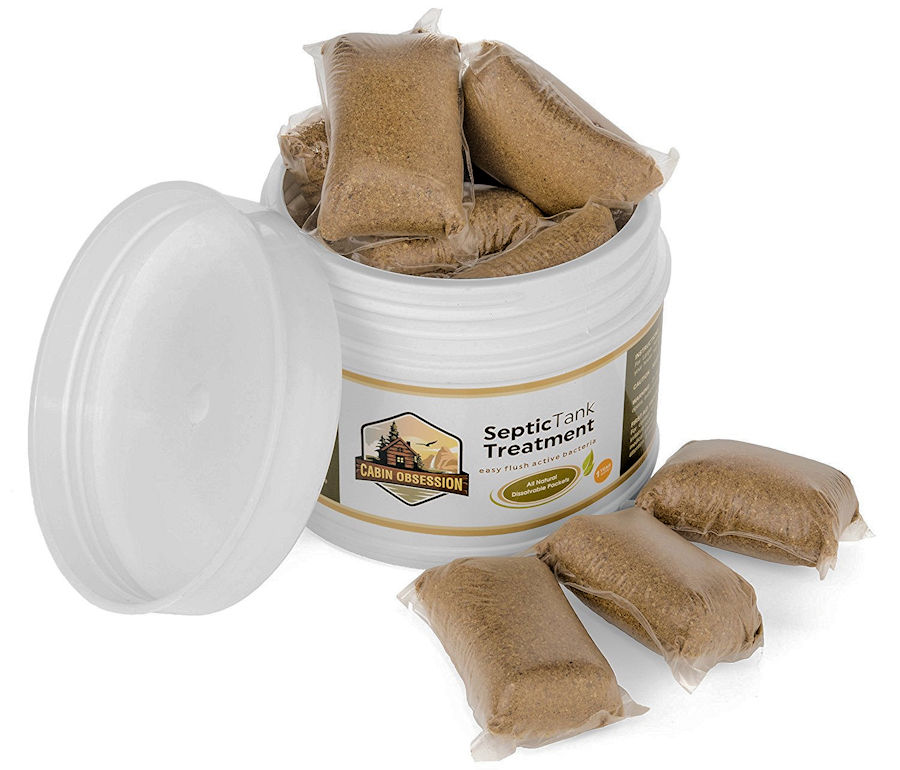
Cabin
Obsession
Best Price on Amazon
As affiliates we may receive payment for purchases made
on Amazon.
|
Our
Selection of Septic Bacteria Products are now on Amazon

As
an Amazon affiliate we may recieve payment for purchases made
through Amazon.
Septic
Tank Cleaning Bacteria
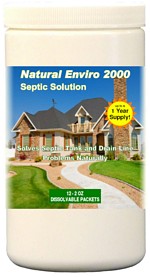 Eliminates: cooking wastes, fats, oils, grease.
Eliminates fruit and vegetable wastes. Eliminates human waste.
Eliminates paper and tissue waste materials. Reduces odors from
septic fields, seepage fields, drainage fields and tanks.
Eliminates: cooking wastes, fats, oils, grease.
Eliminates fruit and vegetable wastes. Eliminates human waste.
Eliminates paper and tissue waste materials. Reduces odors from
septic fields, seepage fields, drainage fields and tanks.
Eliminates septic leachate from ponds and basins. Assists in
the removal of leachate, waste and sewage from ponds. Helps
prevent septic system blockages and back-up and restores slow-flow
drains to maximum capacity.
Application Rates: Add
one pouch per month for septic tanks and septic fields. The
2 pound supply (12 x 2 ounces) typically
treats a single household for one full year depending on size
of septic system. Triple dosage on first
application as a shock treatment to accelerate initial bacterial
function.
For septic tank treatment: Flush one packet
down the toilet. Repeat monthly. Troubled systems may require
heavier initial application. For drain line treatment: Mix one
packet with 1 gallon of water. Pour evenly down all drains.
Repeat monthly.
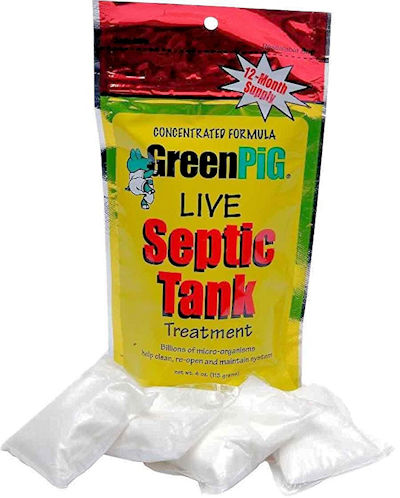 Green
Pig Live Septic Tank Treatment Green
Pig Live Septic Tank Treatment
Drainage failure is due to the gradual buildup of accumulated
sludge.
Undigested raw sewage and grime can build up throughout your
entire septic system including the tank, lines, cesspit, sand
mound, leach field and drain field when the system is untreated
or poorly maintained.
Due to the use of household cleaners and other common chemicals
septic tank systems that have not been properly treated can
have a difficult time digesting and degrading the raw septic
sewage that enters the tank because of a decrease in beneficial
septic tank bacteria.
GreenPig septic tank treatment is populated with one billion
septic tank bacteria that quickly multiply to absorb and digest
sludge, grease, paper and solid waste which may clog your septic,
cesspit, leach field , drain field or and mound systems. Simply
flush one solupak down the toilet once every three months, the
packet will dissolve in your septic system. No mess, no fuss,
no measuring, SIMPLE.
GreenPig is 7 strands of bacteria, over a billion per gram.
The bacteria found in GreenPig have been specifically chosen
to break down septic tank waste.
A colony of bacteria already exist in your septic system, GreenPig
is adding more bacteria to break down waste to help avoid future
problems such as clogged leach fields, pooling of water in the
yard, and obnoxious odors.
Aids in the breakdown of septic waste to help avoid back up
problems GreenPig septic tank bacteria keeps sewage flowing
without restriction Treatment is populated with one billion
septic tank bacteria that quickly multiply to absorb and digest
sludge grease paper and solid waste Treats 500 1000 and 1500-Gallon
tanks by simply flushing one solupak down the toilet once every
three months
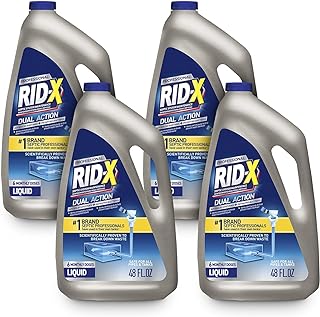 RID-X
Liquid Septic Tank Additive RID-X
Liquid Septic Tank Additive
RID-X Septic System Treatment will give septic system homeowners
peace of mind by helping maintain a free-flowing system.
This RID-X Septic System Treatment 6-Dose Liquid formula is
scientifically formulated with special bacteria and enzymes
to digest household waste.
By adding RID-X to the septic system every month, along with
regular pumping, you can help prevent septic backups and prolong
the life of your system.
This supply is enough for six months of treatment and can also
be used to keep drain pipes running smoothly.
|
Application Rates
Septic Tanks - One 2oz pouch per
1,500 Gallons.
Add one pouch per month for
septic tanks and septic fields. The 2 pound supply (12 x 2 ounces)
typically
treats a single household for one full yea depending on size of septic
system. Triple dosage on first application as
a shock treatment to accelerate initial bacterial function.
For septic tank treatment: Flush one packet down
the toilet. Repeat monthly. Troubled systems may require heavier initial
application. For drain line treatment: Mix one packet with 1 gallon
of water. Pour evenly down all drains. Repeat monthly.
Made only from all natural ingredients that are ecologically responsible
and safe for people, fish and pets. It is our way of helping our customers
more easily select the products that will help them keep their ponds
clean and clear without compromising their belief in natural pond
maintenance.
Ponds - Sixteen to thirty-two 2oz pouches per surface
acre per week.
Add 16 to 32 pouches per surface acre per week
depending on extent of problem. i.e.; for extreme cases of septic
leaking or sewage odors increase dosage. Aeration added to pond will
allow you to reduce by half the weekly dosage. Once the septic,
sewage problem has been addressed then switch from the septic bacteria
to the pond bacteria designed for the aquatic-eco system in a healthy,
clean and unpolluted state.
**The septic formula bacteria has a 3-year shelf
life. Store unused product in a cool dry place, keep from freezing.
This bacteria
mixture can also be useful in ponds. Some ponds have the misfortune
of having a problematic septic tank or field leak waste materials
and leachate into the pond. Even small amounts of waste material running
from a broken or non-working tank can enter the pond and cause odors
and blooms of algae. The high levels of nutrients from oils, grease
and human waste can quickly turn a pond into a foul smelly pit unfit
for swimming or enjoying.
In most cases in ponds we recommend the natural pond bacteria which
removes unwanted nutrients from ponds; when sewage material is involved
it is recommended to use this septic formula to restore the pond and
help repair the septic system.
The application rate for ponds is not the same as in tanks; in ponds
add 32 - 64 ounces per week per acre. This means adding 16 to 32 two-ounce
packages into the pond per week per surface acre. You should also
add the bacteria into your septic tank as well at the rate of 2 ounces
(1 pouch) every month to ensure the sewage in the tank is properly
conditioned so that similar problems of leakage or contamination of
the pond don't happen regularly. Once the problem has been resolved
continue treating the septic tank and to keep nutrients down use the
standard pond bacteria formula, saving the septic bacteria for emergencies
or for regular tank care.
As we've mentioned many times before it will also be extremely beneficial
to add aeration to any pond that has odors, or has been contaminated
by sewage or waste materials. A small air pump with a single diffuser
in even a large pond can help with the restoration after a waste spill
or leakage problem from a septic system.
Solving Septic
Tank Problems
A
septic tank is a key component of the septic system, a system of
sewage treatment in small-scale communal areas unrelated to the
main sewer lines provided by local governments or private companies.
(Other factors, generally binding and / or restricted by local governments,
may include pumps, alarms, sand filters, and liquid effluent disposal
means outlined the scope of a septic tank, the ponds, natural stone
plant fiber filter or peat moss beds.) Septic systems are a type
of On-Site Sewage Facility (FHO). In North America approximately
25% of the population relies on septic tanks, which can include
suburbs and small towns and rural areas (Indianapolis is an example
of a large city where many neighborhoods in the city are still separated
from septic tanks).
In Europe, they are generally limited to rural areas only. The term
"septic" refers to the anaerobic bacterial environment that develops
in the tank and which decomposes or mineralized waste discharged
into the tank. Septic tanks can be coupled with other units on site
wastewater treatment such as biofilters or aerobic systems involving
artificial forced aeration.
Periodic preventive maintenance is necessary to remove the irreducible
solids which settle and gradually fill the tank, which reduces its
effectiveness. In most jurisdictions this maintenance is required
by law, but often not enforced. Those who ignore the requirement
will eventually be faced with costly repairs when solids escape
the tank and destroy the clarified liquid effluent disposal means.
A properly maintained system, on the other hand, can last for decades
and perhaps a lifetime.
A septic system
generally consists of a reservoir (or sometimes more than one tank)
between 4000-7500 liters (1,000 and 2,000 gallons) in size connected
to a sewage pipe entrance at one end and a field drain septic tank
to another. These pipe fittings are usually made through a tube
T which allows the entry and exit of liquid without disturbing any
crust on the surface.
Today, the design of the tank usually has two bedrooms (each has
a manhole cover) which are separated by a separation wall which
has openings located halfway between the floor and roof of the tank.
Wastewater from the first chamber of the tank, allowing solids to
settle and residual float. The solids are established anaerobic
digestion, reducing the volume of solids. The liquid component flows
through the separation wall in the second chamber where further
settlement takes place with the excess liquid, then drain in a relatively
clear decision in the drainfield, also called field leakage or seepage
field, depending on locality.
The remaining impurities are trapped and disposed of in soil with
excess water removed by percolation into the ground (before returning
to ground water) by evaporation , and absorption through the root
system of plants and transpiration possible. A network of pipelines,
often set in a stone filled trench (see weeping tile), distributes
the wastewater into the field with several drainage holes in the
network. The size of the septic field is proportional to the volume
of wastewater and inversely proportional to the porosity of the
drainage field. The entire septic system can operate by gravity
alone, or where topographic considerations require, with the inclusion
of a lift pump. Some models include septic tank traps or other methods
to increase the volume and velocity of flow in the drainage field.
This will load all the parts of the drainage pipe more evenly and
extends the life of the field drainage by preventing premature clogging.
An Imhoff tank is a two-tier system where septage is digested in
a separate tank. This avoids mixing digested sludge with incoming
sewage. In addition, some models of septic tanks have a second stage
when the anaerobic effluent from the first stage is aerated before
it empties into the area of infiltration. Waste that is not decomposed
by the anaerobic digestion eventually be removed from the septic
tank or septic tank fills up and discharges of untreated wastewater
directly decomposed into the drainage field.
Not only is it bad for the environment, but if the sludge from the
septic tank overflowing into the drainfield, it can clog the drainfield
pipe or decrease the porosity of the soil itself, requiring repairs
expensive. How often the septic tank must be emptied depends on
the volume of the tank relative to the entry of solids, and indigestible
solids at room temperature (such as anaerobic digestion is more
efficient at high temperatures).
The frequency required varies considerably depending on the jurisdiction,
the use and characteristics of the system. Some health authorities
require tanks to be emptied at prescribed intervals, while others
allow the determination of the inspector. Some pumping systems need
a few years or sooner, while others may be able to go 10-20 years
between pumping.
Contrary to what many think, there is no "rule of thumb" for how
often tanks should be emptied. An older system with a small reservoir
that is used by a large family, will require much more frequent
pumping of a new system used by few people. Anaerobic decomposition
is restarted quickly when the tank is refilled. A properly designed
and normally operating septic system is odor free and besides the
periodic inspection and pumping of the septic system should last
for decades without maintenance. A well designed and maintained
concrete, fiberglass or plastic tank should last about 50 years.
Cabin Obsession Treatment
Available At Amazon Septic Tank Treatment
These monthly easy flush dissolving packets are specially
formulated to help break down waste and maintain a properly functioning
septic system. This is the easiest and most efficient way to prevent
expensive septic tank backups and drain field repairs. Just flush
one packet down your toilet each month.
Each packet contains billions of active bacteria cultures that are
scientifically selected to produce, activate, and recharge the enzymes
needed to reduce solids and decompose the different types of waste
found in both the sludge layer and scum layer of your septic tank,
and even out into the leach field.
Each flushable septic treatment packet is all natural, with no chemical
additives. They’re safe for all home plumbing lines, and any black
water system or cesspool, so flush each packet down your toilet
with absolute confidence!
Not only is this the best way to maintain a healthy residential
septic system, but our concentrated formula dissolvable enzyme pouches
are also ideal for use in marine holding tanks and camper toilets
too! And because of the advanced digestion rate of odor causing
bio organic wastes, they aid in controlling and getting rid of bad
smells too.
Cabin
Obsession Septic Bacteria
Best Price on Amazon
As affiliates we may receive payment for purchases
made on Amazon.
Potential
Problems With Septic Tanks Solved With Septic Bacteria
• Excessive
dumping of cooking oils and grease can cause the inlet drains to
block. Oils and grease are often difficult to degrade and can cause
odor problems and difficulties with the periodic emptying.
• Flushing non-biodegradable items such as cigarette butts
and hygiene products such as sanitary towels and cotton buds will
rapidly fill or clog a septic tank; these materials should not be
disposed of in this way.
• The use of garbage disposers for disposal of waste food can
cause a rapid overload of the system and early failure.
• Certain chemicals may damage the working of a septic tank,
especially pesticides, herbicides, materials with high concentrations
of bleach or caustic soda (lye) or any other inorganic materials
such as paints or solvents.
• Roots from trees and shrubbery growing above the tank or
the drain field may clog and/or rupture them.
• Playgrounds and storage buildings may cause damage to a tank
and the drainage field. In addition, covering the drainage field
with an impervious surface, such as a driveway or parking area,
will seriously affect its efficiency and possibly damage the tank
and absorption system.
• Excessive water entering the system will overload it and
cause it to fail. Checking for plumbing leaks and practicing water
conservation will help the system's operation.
• Over time biofilms develop on the pipes of the drainage field
which can lead to blockage. Such a failure can be referred to as
"Biomat failure".
• Septic tanks by themselves are ineffective at removing nitrogen
compounds that can potentially cause algal blooms in receiving waters;
this can be remedied by using a nitrogen-reducing technology, or
by simply ensuring that the leach field is properly sited to prevent
direct entry of effluent into bodies of water.
Email us for information or with your questions.
 Pond
Report Store Pond
Report Store
The
pond report also has information on:
Algaecides
& Bacteria | Deicers
& Bubblers | Weed
Removal | Liquid
Bacteria | Pond
Pumps & Fountains | Aeration
| Winter
Pond Care | Algae
Control | Pond
Liner | Muck Pellets |
Build
a Solar Aerator | Rotary
Vane Compressors | Floating
Fountains
| Building
a Pond | Linear
Air Compressors & Pumps | Weighted
Airline | Diffusers
& Airstones | Solar
Aeration Systems | DC
& Battery Operated Pumps | Windmill
Aeration | Dock
Bubbler Packages | Building
a Waterfall |
Dyes & Colorants | Consultations
| Questions &
Answers
| Links
& Resources | Eurasian
Milfoil
| |
Mosquito Control | Pondkeeper
Treatments | Aeration
Systems | Septic
Bacteria | Grease
Trap Blocks | Compost Aeration | Dissolved
Oxygen Meters | SOTR
& Pumping Rates |
Portable
Generators |
Duckweed Control
|
Pond
Plans & Pond Building Books & Guides |
© 2007
- 2024 The Pond Report
about
us | privacy
policy | contact
us
|
