|

A Pond And The Seasons
Explaining the normal evolution of ponds, lakes
& water gardens
Email
us for more pond information or with your specific questions.
Almost
all natural ponds, with or without aeration, will go through a series
of classic stages with the changing seasons of the year. If you
have had a pond for a number of years you may be familiar with some
of the processes that take place during the year and if your pond
has become stgnant or smelly you likely have read about how aeration
can help with the health of your pond.
In the
spring in most Northern ponds, as ice and snow begins to melt from
the surface of the pond due to the temperature rising with with
the longer hours of sunshine, several distinct processes start in
your pond that may lead to the degradation of the water quality
in the pond. Many natural and man-made ponds when not properly aerated
will see water stagnate and the water temperature tends to remain
at a very uniform level; warm near the surface and cold yet oxygen
starved at the bottom.
When adding
the circulating benefits of aeration we can reverse many negative
changes that occur in a pond including build-up of algae and bottom
muck.
For instance, if you add a lake bed style bottom diffuser aerator
the rising water column creating by the bubbling diffuser of your
aerator will help to circulate and mix the pond water. Without the
bubbling action of this sort of air-compressor driven aerator the
pond water will only be slightly mixed by blowing winds across the
surface and this typically only affects the top levels of the pond.
Lower depths remain untouched and the temperature tends to remain
constant and the oxygen levels can remain low which can cause the
release of phophorous and other detremental bottom sediments. A
surface aerator can be helpful in that it will not break the thermocline
and using a surface aerator will ensure that delicate fish will
not become over-heated. Using a thermostat controller on your bottom
mounted aerator also reduces the risk of fish-kills.
As the spring runoff starts to deposit plant nutrients and organic
sediments from the shoreline, many un-wanted byproducts of agriculture
and human over-population can cause an imbalance in the eco-system
and these nutrietns which settle in the pond can lead to filamentous
algae or green water and other common pond problems.
Without adequate circulation in the pond or lake these sediments
will collect on the bottom of the pond and begin decomposing or
chemically altering the composition of the pond sediments which
can, under the proper seasonal conditions, lead to algae blooms
that can disturb the peace and natural balance of the pond. If left
alone, over time, with the oncoming warmth of summer you will quite
possibly see these additional nutrients begin to encourage a rapid
growth of algae, bottom muck, and often cloudy green pond water.
Without
the best form of aeration to assist the winds attempts in natural
circulating of the pond water, the suns summer rays will warm the
upper levels of the pond while warm, oxygen lacking water will stay
below on the colder deeper water which often is unsuitable for fish
due to the low dissolved oxygen levels.
The un-aerated
pond may started to develop bloomd of surface algae which restricts
the penetration of light rays to merely the surface of the pond
so that oxygen producing bottom-rooted plant life cannot grow. At
the same time, having too many nutrients that combine with clear
waters and constant sunshine can lead to excessive pond weeds that
can create thick choking weed mats that float to the surface and
spoil the pond due to their invasive aquatic weed nature.
Without
an aeration system often the pond water is beginning to lack oxygen
and large amounts of this floating, hairlike algae die, settle and
then decomposeto the bottom of the pond where the still oxygen lacking
waters become the perfect medium for the collection of noxious gases
and nutrients that turn the sediment into a poisonous mix that can
harm fish and other aquatic creatures.
Our
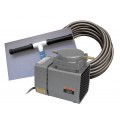
Choices For Pumps on Amazon
As an Amazon affiliate we may
recieve payment for purchases made through Amazon. |
|
|
|
|
|
|
|
|
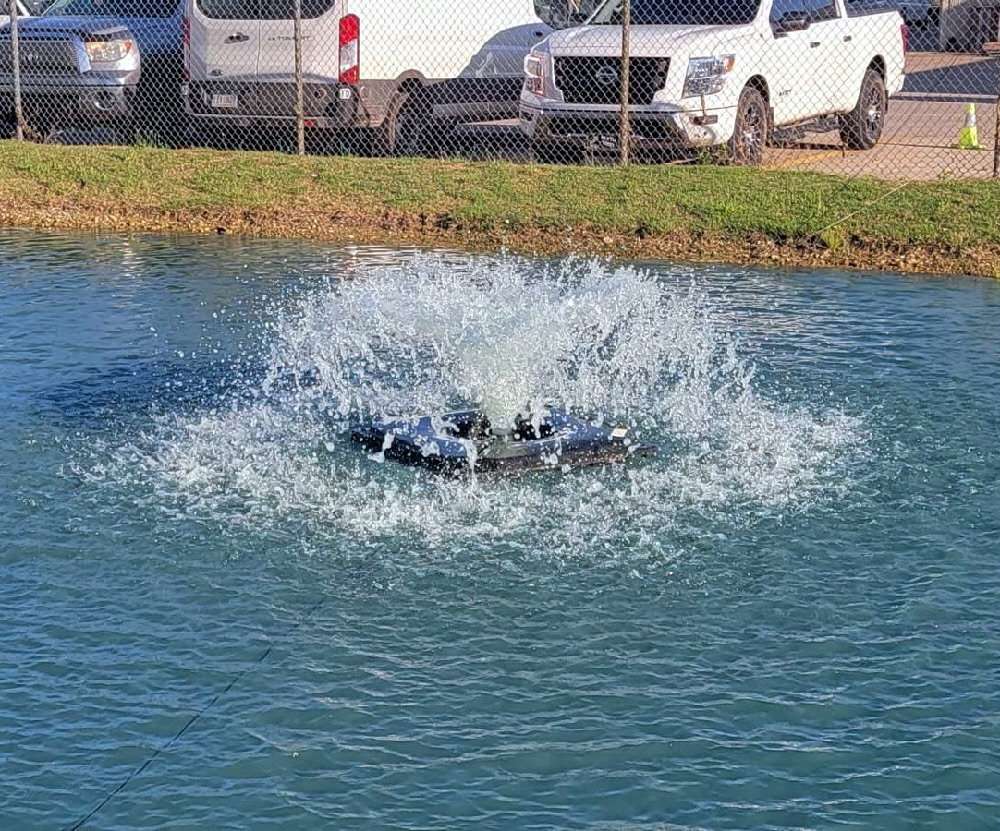
Using a surface aerator like a fountain
or bottom mounted diffusers, often called lake-bed aeration or even
an aerating windmill will keep the layers of the pond in a constant
mixing motion which prevent the surface algae from building up and
preventing the suns rays from helping grow the necessary oxygen
delivering plants.
Care should be taken to not stir up the pond like a washing machine
as certain species of fish like trout for instance prefer colder
waters and by using aeration 24 hours per day you may actually cause
the waters to overheat which can cause serious health issues or
mortality to fish.
Such destructive
cycles can worsen in the long hot days of North American summers as
we experience steady days of high temperatures and often the green
algae consumes all of what remains of the ponds diminishing oxygen
and nitrogen supplies and algae begin to die and drop to the bottom
of the pond. Not all algae in a pond is bad and under these extreme
warm conditions the healthy green algae can replaced by blue green
algae which is undesirable and often toxic for the pond.
Blue-green algae can grow without nitrogen and will soon dominate
the pond; the proliferation of blue green algae in our lakes and ponds
is a growing concern and luckily private pond owners can rectify the
problem easier than municipalities who must bow to municipal and government
regulations that often prohibit the installation of aeration systems
and the use of beneficial bacteria to help curb and reverse the problems
of eutrophic lakes and ponds.
Continuing
in our look at the pond; the beneficial green algae, yes, not all
of it is bad for our ponds, which dies and settles to the bottom of
the pond begins to decompose and consumes the little remnants of oxygen
that cannot be replaced since there is no aeration. To introduce fresh
oxygenating air bubbles from the bottom diffuser assembly or from
a windmill airstone or even an aerating fountain will assist in keeping
the pond well mixed and the steady supply of oxygen can envigourate
the fish which will heartily empower the entire aquatic eco-system.
Scientific
studies have shown that when we introduce the cleansing agitation
from an aeration system and the mixing is taking place in the pond
we find the layer of potential nutrients such as nitrogen and phosphorus
and such metals and manganese and iron will actually become sealed
and trapped in the sedimentary sludge on the pond floor as if a protective
layer encapsulates these unwanted substances and they are banned from
harming the pond!
An aeration
system strategically placed in the pond floor can assist in preventing
this settling of noxious muck which could form a layer of septic sludge
and lead to water of extremely poor quality. To determine if a surface
aerator or bottom mounted aerator is best suited for your pond it
is recommended that you speak to a qualified pond expert in your area.
Every pond is different and while certain rules apply there are, as
mama used to say, many ways to skin a cat and twice as many ways to
aerate a pond in the wrong manner!
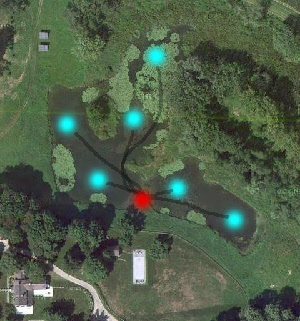 Simply
put, adding aeration to a pond, water-garden or even a natural
lake is one of the best methods to control algae and maintain
clear waters and discourage the build-up of bottom sediments. Simply
put, adding aeration to a pond, water-garden or even a natural
lake is one of the best methods to control algae and maintain
clear waters and discourage the build-up of bottom sediments.
It is extremely important never to overlook aeration when building
a new pond or when trying to restore one that is undergoing
eutrophication especially in small basins athat have a large
organic load and that are typically mucky at the bottom. The
organic material can be grass clippings, so it is best to leave
a perimiter of natural thick vegetation and even aquatic plants
to help reduce erosion and prevent runoff laced with fertilizers
from getting into the water.
Our experience has shown that in most cases that adding air
diffusion into the bottom levels of the pond is often the the
best form of aeration.
This manner of aerating is basically the injection of air bubbles
into the water to supply oxygen as well to create water movement
because as the small air bubbles rise to the surface they create
a movement that pulls oxygen deprived waters from the depths
up towards the surface where they can interact with the atmosphere
and achieve a high level of efficient oxygen transfer.
Solar
Aeration Systems | Build
Your Own Aeration System | Complete
Aeration Systems
Our
Favorite Amazon Aeration Products
As an Amazon affiliate we may recieve payment for
purchases made through Amazon. |
Let's get back
to the seasons..with the autumn equinox bringing cooler temperatures
to your pond, and if you only have the wind to perform any water
mixing and circulating we can only expect limited improvements in
the water quality.
Again this is why winter aeration and fall aeration cannot be discounted
especially in areas of northern latitude where we have distinct
seasons because in these conditions, as the newer algae begins to
die and sink to the bottom they once again decompose and consume
the available oxygen in the pond which, if there is no aeration,
is severely limited.
Once
our winter comes in like a white coated dentist and the frosty bellows
of cold begin to allow ice and the ice forms on the pond only a
tiny amount of oxygen can actually diffuse through the surface of
ice. Of course, fish are at a state of reduced metabolism so the
issue of oxygen for fish is not a prime concern although to prevent
fish-kills it is best to maintain an open hole from an aerator in
the ice to allow a "breathing" of the pond...the escaping
gases that are released through the ice hole are better allowed
into the atmosphere instead of being trapped below the ice.
Even in the
cold the cycle continues and the decomposing algae in the pond are
constantly consuming what little oxygen remains and once again a
detrimental layer of nutrients and metals begin to form an ever
increasing layer of harmful sludge on the bottom. As was stated
earlier, the bottom mounted diffuser can help remedy this collection
of bad build-up.
When the
oxygen supply in a pond is sufficiently reduced you will may notice
the stink of hydrogen sulfide (that horrible rotten egg smell),
bad taste (if you brush your teeth in the pond) , muck and scum
build-up and maybe unusually high fish kills.
Installing either a homemade aeration system or a turn-key system
offered by many pond supply stores will keep the ice from completely
closing over during the cold months and not to mention the continuous
supply of oxygenating bubbles during the winter enhances and promotes
the natural breathing of the pond. This constant approach to pond
maintenance will ensure that the water in the pond retains its clarity
and all of the the beneficial organisms including healthy bottom
rooted plants and cleansing algae will flourish and keep the pond
alive and the water quality high for bathing, drinking, swimming
or any appropriate use.
Of all the treatments for ponds, lakes and watergardens that exist
one of the most critical may be ensuring that an efficient aeration
system is in place. Of course not all ponds will require one but
even a pond that has been perfectly designed may suffer the occasional
ills due to seasonal influences but before reaching for drastic
measures like algaecides or copper-suplhates it may be only a question
of adding a simple and inexpensive aeration
system.
For
more information on pond aeration visit the following ten pond aeration
websites. Pleasse note that we are not specifically endorsing any
particular way of treating ponds or any particular business. Due
dilligence in all things!
Pond
Report Store
Recommendations for :
windmill aeration systems
| solar
aeration systems
Waterfall
& Pond Books & Guides
Our
Favorite Selections From Amazon

As
an Amazon affiliate we may recieve payment for purchases made
through Amazon.
|
 All
About Building Waterfalls, Ponds, and Streams All
About Building Waterfalls, Ponds, and Streams
A practical, easy-to-understand guide to adding both still (ponds)
and moving (waterfalls and streams) water features to any garden.
Includes complete, easy-to-follow instructions on designing,
establishing, and caring for a variety of eye-pleasing water
projects. |
 How
to Build Ponds and Waterfalls and Much More... How
to Build Ponds and Waterfalls and Much More...
This incredible book was written with the consumer in it's a
show and tell presentation of everything needed to build spectacular
water gardens.
The methods shown in these chapters are proven, and have been
taught to thousands of do-it-yourselfers. |
 Smart
Guide: Ponds, Fountains & Waterfalls (Landscaping) Smart
Guide: Ponds, Fountains & Waterfalls (Landscaping)
Whether readers are deciding on the type of pond that best suits
their wants and needs or trying to decide whether a stream or
a waterfall fits better into their landscape, Smart Guide: Ponds,
Waterfalls & Fountains has it all. |
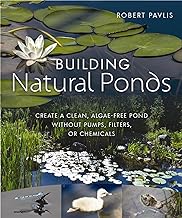 Building
Natural Ponds: Create a Clean, Algae-free Pond without Pumps,
Filters, or Chemicals Building
Natural Ponds: Create a Clean, Algae-free Pond without Pumps,
Filters, or Chemicals
Typical backyard ponds are a complicated mess
of pipes, pumps, filters, and nasty chemicals designed to adjust
pH and keep algae at bay. |
Suggested
References and Sites of Interest:
1.
Florida
Fish & Wildlife Conservation - Management of ponds
should take into account important conservation principles
2. Wiki Water Gardens wikipedia
Water Gardens
3. Flash animation: Dugout Aeration www.agr.gc.ca/pfra/flash/dugout/en/dugout_e.htm
4. Texas A&M AgriLife Extension Aquaculture, Fisheries, &
Pond Management https://fisheries.tamu.edu/aquaculture/aeration/
5. Low oxygen & pond aeration www.ca.uky.edu/wkrec/LowOxygenandPondAeration.htm
6. Quality Pond Aeration www.qualitypond.ca
7. Lake aeration systems www.vertexwaterfeatures.com
8. Pond aeration - Wikipedia en.wikipedia.org/wiki/Pond_Aeration
9. The Role of Aeration in Pond Management edis.ifas.ufl.edu/FA021
10. Atlantic
Pond Supply USA Atlantic
Pond Supply
11. Virgina
Soil & Water Conservation District - https://www.fairfaxcounty.gov/nvswcd/ponds.htm
The pond report
also has information on:
Algaecides
& Bacteria | Deicers
& Bubblers | Weed
Removal | Liquid
Bacteria | Pond
Pumps & Fountains | Aeration
| Winter
Pond Care | Algae
Control | Pond
Liner | Muck Pellets |
Build
a Solar Aerator | Rotary
Vane Compressors | Floating
Fountains
| Building
a Pond | Linear
Air Compressors & Pumps | Weighted
Airline | Diffusers
& Airstones | Solar
Aeration Systems | DC
& Battery Operated Pumps | Windmill
Aeration | Dock
Bubbler Packages | Building
a Waterfall |
Dyes & Colorants | Consultations
| Questions &
Answers
| Links
& Resources | Eurasian
Milfoil
| |
Mosquito Control | Pondkeeper
Treatments | Aeration
Systems | Septic
Bacteria | Grease
Trap Blocks |
Compost Aeration | Dissolved
Oxygen Meters | SOTR
& Pumping Rates |
Portable
Generators |
Duckweed
Control |
Pond
Plans & Pond Building Books & Guides |
© 2007
- 2024 The Pond Report
about
us | privacy
policy | contact
us
|
Soilfloc®
Pond Sealant
 Polymer Pond Sealant
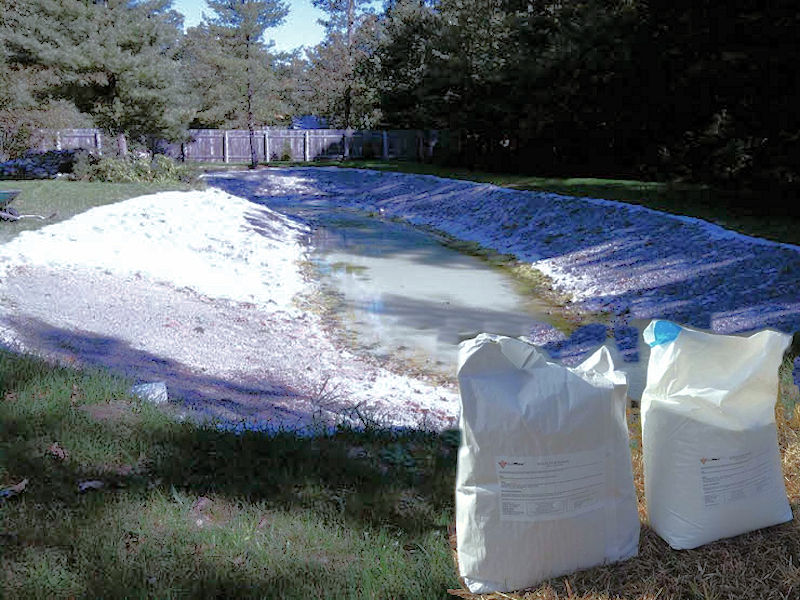
Soilfloc® Sealant is the best polymer based sealant
available for your canal, irrigation ditch or watering hole. Specifically
designed to find leaks, whether in the floor, the wall or through
rock formations and seal them. Soilfloc® custom blends linear
and cross-linked polymers to seal any type of soil, for any sized
project.
Muck
Remover
The biological removal of muck and sludge from
ponds, lakes and canals is an ecological way to eliminate organic
sediments from ruining shorelines and making swimming impossible.
Safe muck eating bacteria are blended from anaerobic bacterial
mixtures and enzymes that specifically target the thick, black,
stinky muck that is common in ponds and lakes.
Dock
Bubblers
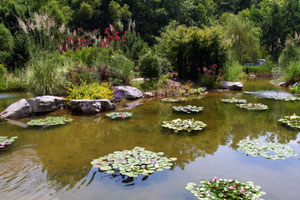
Bubbler systems use perforated tubing placed at
the bottom of the water around a boathouse, dock or wall. When
using diffuser lines to protect your dock from ice damage there
will be some fairly common installation procedures: place the
air compressor in a ventilated cabinet or shed and run an airline
to the structure where a weighted bubbler hose is placed at strategic
points around the dock or against the wall.
Solar
Aeration
Bacteria
& Clarifiers
Large
Ponds & Lakes
Pond
Pumps
Information
& Articles
Solar
Aerating Fountains
Pond
Books & Guides
Our
Selections On Amazon
As an
Amazon affiliate we may recieve payment for purchases made
through Amazon.
|
The
Lakes Handbook: Lake Restoration and Rehabilitation

Lake
and Pond
Management Guidebook

Earth
Ponds
The Country Pond Maker's Guide to Building, Maintenance
and Restoration

Pond Restoration & Lake Management
Lakes and Reservoirs

Master
Book of the Water Garden:
The Ultimate Guide to the Design and Maintenance of the Water Garden

Wind
Power Fundamentals, Technologies, Application, Economics

Energy
Independence, Off-Grid and Sustainable Living

Master
Book of the Water Garden:
The Ultimate Guide to the Design and Maintenance of the Water Garden
|